Can You Bring an Electric Toothbrush on a Plane? (TSA Rules 2026)
November 2, 2026
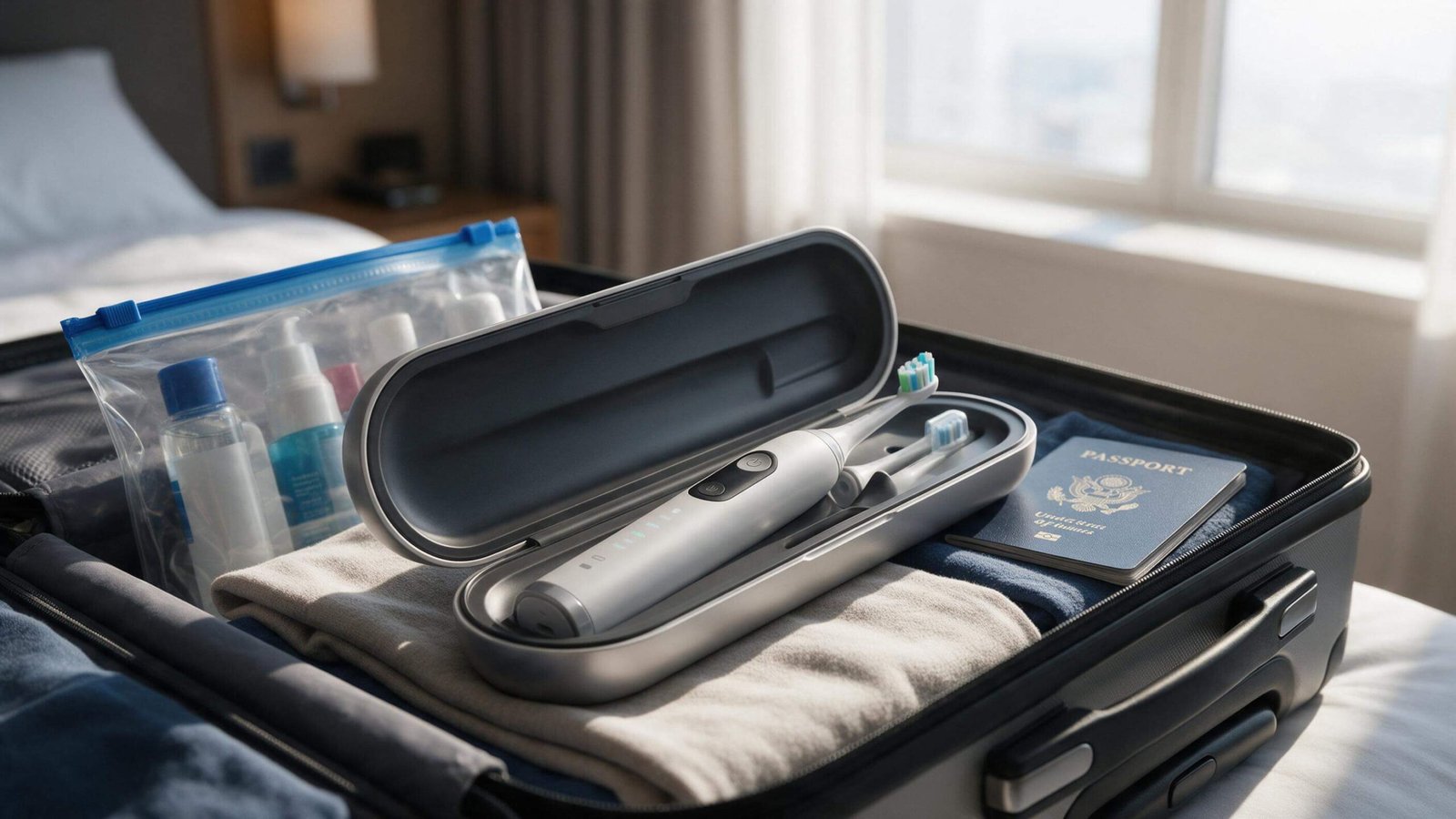
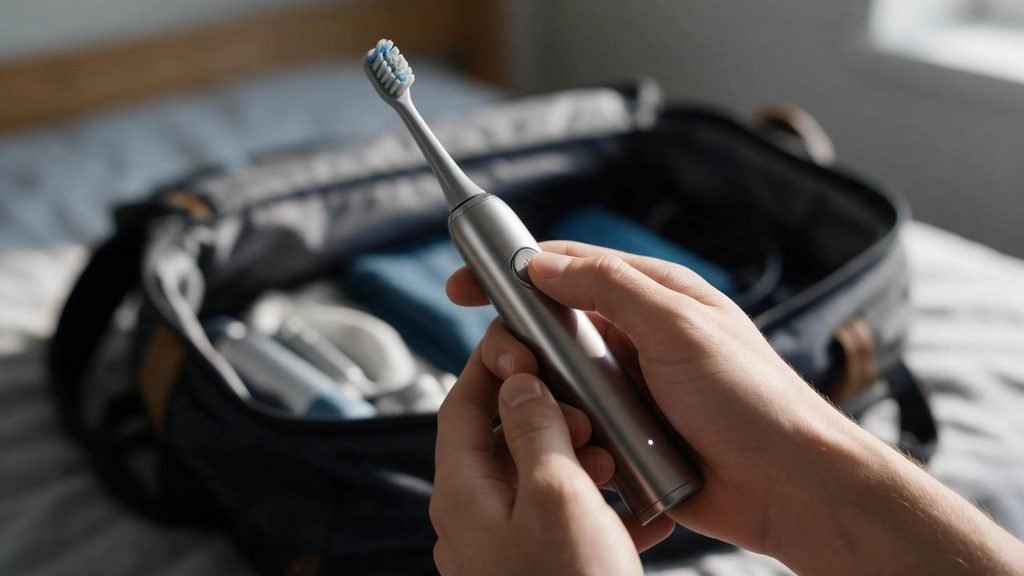
Yes, you can bring an electric toothbrush on a plane in 2026. Under current TSA and FAA rules, electric toothbrushes are allowed in both carry-on and checked bags. However, if your toothbrush runs on a rechargeable lithium-ion battery, the TSA strongly recommends packing it in your carry-on bag to prevent cargo fire hazards and security delays. Our travel team at bilaltravels.net has tested these rules across dozens of airports to help you pack without stress.
Pack in your carry-on. If checked, it must be completely off and protected from turning on.
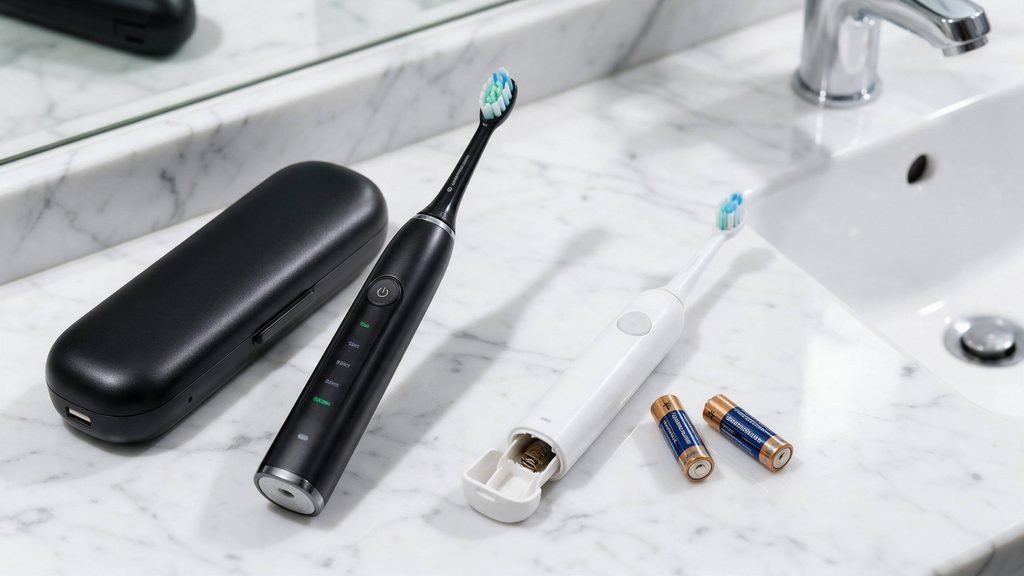
AA / AAA Battery Toothbrush
Yes
Yes
Allowed in either bag. Take the batteries out so the brush does not vibrate in transit.
Spare Lithium Batteries
Yes
No
Strictly banned in checked luggage. Keep all loose or spare lithium batteries in the cabin.
Toothbrush Charging Base
Yes
Yes
Safe for both bags. Wrap the cord neatly so it does not snag on other items.
Water Flosser (Waterpik)
Yes
Yes
You must empty the water tank completely before going through the security checkpoint.
Toothpaste (Liquids / Gels)
Yes (Max 3.4 oz)
Yes (Any Size)
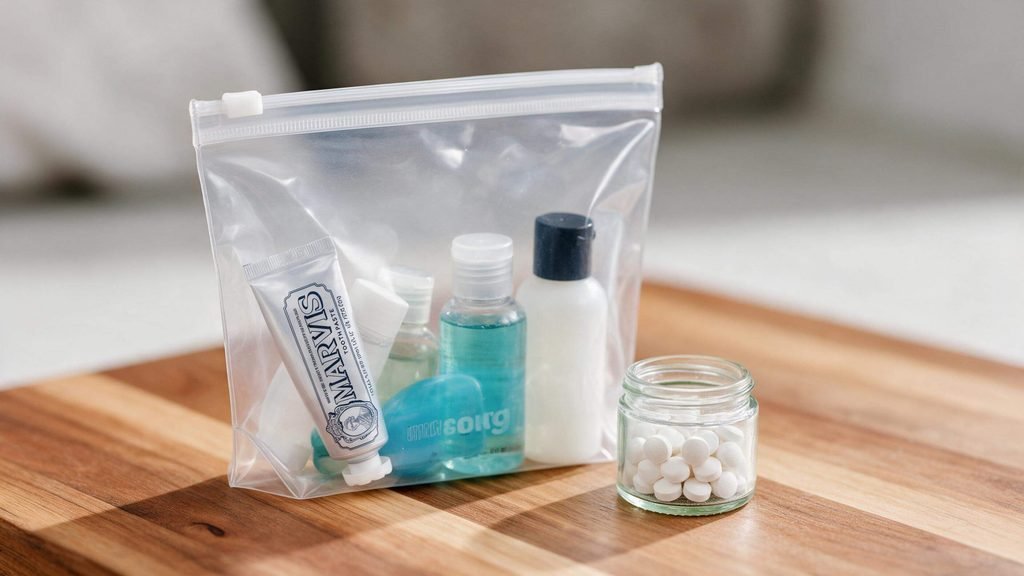
Carry-on tubes must be 3.4 oz (100 ml) or smaller and fit inside your 1-quart clear zip-top bag.
The Exact 2026 TSA Rules for Electric Toothbrushes
When you walk up to an airport security checkpoint, the TSA officer does not care about the plastic handle or the nylon bristles of your toothbrush. They care about what powers the motor.
To pack the right way, you need to know which kind of battery sits inside your brush handle.
Most modern electric toothbrushes—like the Philips Sonicare, Oral-B iO Series, Burst, and rechargeable Quip models—run on built-in lithium-ion batteries.
The Federal Aviation Administration (FAA) is very strict about lithium-ion batteries because they can overheat and catch fire in a process called “thermal runaway.” If a battery catches fire in the passenger cabin, the flight crew can put it out quickly. If it catches fire in the belly of the plane, the automated cargo suppression system might struggle to stop it.
Carry-On Bags: This is where your rechargeable toothbrush belongs. Battery size is measured in Watt-hours (Wh). The FAA allows lithium-ion batteries up to 100 Wh in your carry-on. A standard electric toothbrush battery is tiny—usually under 5 Wh—so you can easily bring it into the cabin.
Checked Bags: Technically, the TSA allows a lithium-ion toothbrush in a checked bag only if the battery is installed inside the device and the brush is completely turned off. However, we strongly advise against checking it. If your suitcase shifts on the conveyor belt and presses the power button, a buzzing suitcase will trigger a security alert.
2. AA and AAA Battery-Powered Toothbrushes
If you use a budget-friendly electric toothbrush like an Arm & Hammer Spinbrush, Oral-B Pro-Health Clinical, or a standard Quip powered by a single AAA battery, your packing routine is much simpler.
Standard Alkaline or NiMH Batteries: Dry-cell batteries (like standard Duracell or Energizer AA and AAA batteries) do not carry the same fire risk as lithium-ion cells.
Where to Pack: You can toss these toothbrushes into your carry-on backpack or your checked suitcase without worrying about FAA battery restrictions.
One Simple Rule: Pop the battery out of the handle before you zip up your bag. Even without a fire risk, a buzzing suitcase still makes baggage handlers nervous.
3. Spare and Loose Lithium Batteries
Some older or specialty travel toothbrushes use removable lithium metal or lithium-ion batteries. If you travel with extra, uninstalled lithium batteries, they must go in your carry-on bag.
If you pack loose lithium batteries in a checked suitcase, TSA scanners will spot them, open your bag, and confiscate them. Tape the ends of any spare batteries with clear packing tape or keep them in their original retail packaging so the metal terminals do not touch coins or keys in your bag.
How to Pack Your Electric Toothbrush for Security
Our travel team flies out of busy hubs like Atlanta (ATL), Chicago O’Hare (ORD), and Los Angeles (LAX) almost every week. In 2026, most major US airports use advanced 3D Computed Tomography (CT) scanners at the security lanes.
Here is how to breeze through the checkpoint without getting pulled aside for a bag check:
Leave It Inside Your Bag: You do not need to pull your electric toothbrush out of your carry-on bag. Unlike laptops at older security lanes, small grooming gadgets can stay packed inside your toiletry kit.
Detach the Brush Head: Take the bristle head off the metal shaft before packing. If your bag gets squished in the overhead bin, an attached brush head can snap right off or bend the internal motor shaft.
Pack Your Charging Base Smartly: Toothbrush chargers contain coiled copper wire inside the base to charge the brush wirelessly. On an older X-ray screen, a dense coil of wire can sometimes look unusual. Keep your charger in an easy-to-reach pocket just in case an agent wants to take a quick look.
UV Sanitizing Cases: Many travelers now use portable UV-C light cases (like the Bril sanitizer) to kill germs on their toothbrush heads. Most of these cases have their own built-in lithium-ion batteries. Because of that battery, always pack UV sanitizing cases in your carry-on bag.
What About Water Flossers and Waterpiks?
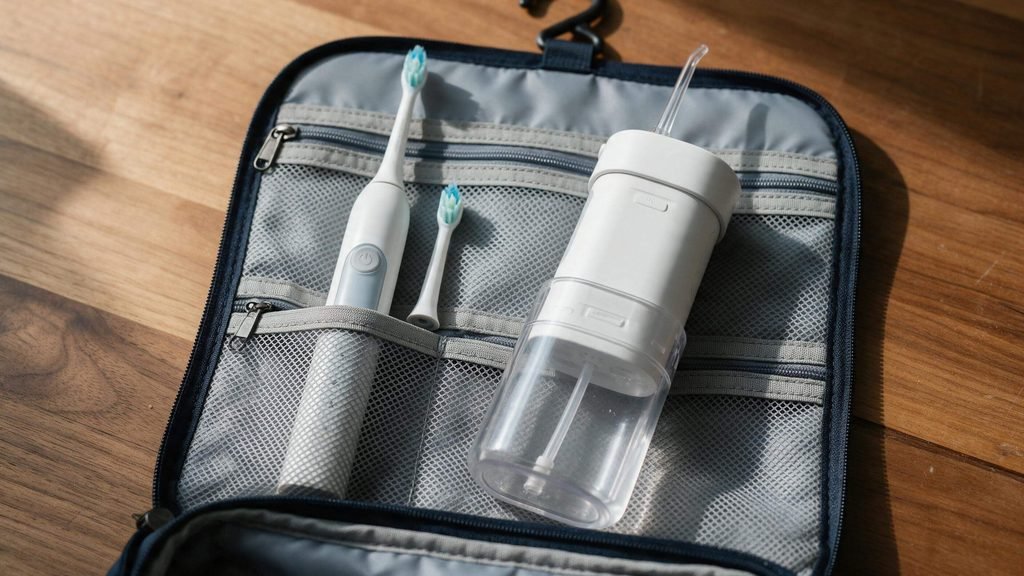
If your oral care routine includes a Waterpik or Philips Sonicare Power Flosser, you can bring that on the plane too.
Cordless Models: Most portable water flossers run on rechargeable lithium-ion batteries, so pack them in your carry-on.
Countertop Models: Larger plug-in models have no batteries and can safely go into your checked luggage to save space in your backpack.
Empty the Tank: This is the biggest mistake travelers make. You must drain every drop of water and mouthwash out of the reservoir before heading to the airport. If a TSA scanner sees a full water tank in your carry-on, it violates the 3.4-ounce liquid rule, and you will be forced to dump it out or surrender the device.
Airline-Specific & International Policies in 2026
While the TSA handles airport security in the United States, individual airlines and foreign aviation agencies have their own rules you need to follow.
Major US Airlines (Delta, United, American, Southwest)
All major US carriers align their baggage rules with the FAA. However, gate agents have become much stricter in 2026 about gate-checked bags.
If you are flying in a late boarding group on United or American Airlines and the overhead bins fill up, the gate agent will force you to check your roller bag at the jetbridge. Before you hand your bag over, pull your lithium-ion electric toothbrush out and put it in your personal item (like your backpack or purse). Gate-checked bags go straight into the cargo hold, and airlines ask you to remove all lithium-ion devices before the bag is tagged.
Flying Internationally (Europe, UK, and Asia)
If you are flying overseas, agencies like the European Union Aviation Safety Agency (EASA) and the UK Civil Aviation Authority (CAA) enforce the same 100 Wh lithium-ion battery rules as the US. Your toothbrush is welcome in your cabin bag anywhere in the world.
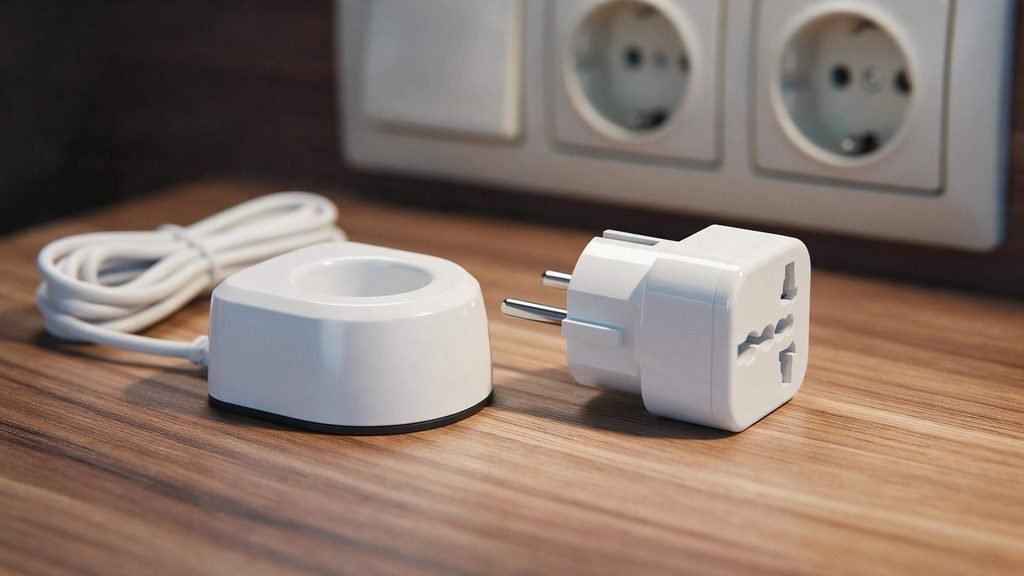
Watch Out for Voltage Differences: The biggest danger to your toothbrush abroad isn’t airport security—it is the hotel bathroom outlet.
The United States uses 110–120V electricity.
Europe, the UK, Asia, and Australia use 220–240V electricity.
The Trap: Many older Oral-B charging bases are single-voltage (marked 110–130V on the bottom). If you plug a 110V charger into a 220V European wall socket using a simple plug adapter, you will fry the charger and potentially ruin the toothbrush.
The Fix: Look at the fine print etched into the bottom of your charger. If it says 100–240V, it is dual-voltage and safe to use worldwide with a basic plug adapter. Most newer Philips Sonicare chargers and USB-C charging travel cases are dual-voltage.
Don’t Forget the Toothpaste Rules (The 3-1-1 Trap)
While your electric toothbrush sails through security, your toothpaste is the number one item TSA officers confiscate from toiletry bags every single day.
The TSA classifies toothpaste, gels, and mouthwash as liquids. If you pack them in your carry-on bag, they must follow the 3-1-1 Liquids Rule:
3.4 ounces (100 milliliters) or less per container.
1 quart-sized, clear, plastic zip-top bag.
1 liquid bag per passenger.
Beware the Half-Empty Tube Trick: You cannot bring a full-sized 6-ounce tube of Crest or Colgate in your carry-on, even if it is rolled up and almost empty. TSA agents judge the item by the printed size on the label, not how much paste is left inside. If the tube says 4.0 oz, it goes in the trash bin (or into your checked suitcase).
Want to skip the liquid bag hassle altogether? Switch to solid toothpaste tablets (like Bite or Huppy) or tooth powder for your trip. Because they are dry solids, you can bring as many as you want in your carry-on without taking up space in your liquids bag.
How a Packing Mistake Can Cost You (Fines, Lost Gear & Insurance Perks)
High-end smart toothbrushes are expensive pieces of tech. Models like the Oral-B iO Series 10 or the Philips Sonicare 9900 Prestige retail between $250 and $380. Treating them like a $2 plastic toothbrush can cost you real money.
1. Security Delays and Confiscation
If you pack a rechargeable toothbrush in your checked bag and it turns on by accident, the vibration will alert baggage screeners. Security teams have to treat every buzzing or ticking bag as a potential threat.
At best, TSA officers will break the lock on your suitcase, dig through your clothes, turn off the toothbrush, and leave an inspection notice inside. At worst, your bag gets held back for a manual bomb-squad sweep, and your luggage misses your flight entirely. Furthermore, intentionally hiding prohibited spare lithium batteries in checked luggage can carry civil FAA fines of up to $17,062 per violation.
2. Using Credit Card Baggage Delay Insurance
What happens if you decide to check your bag (perhaps because you packed a full-sized tube of prescription toothpaste alongside your brush) and the airline loses or delays your suitcase?
If you paid for your flight using a travel rewards credit card—such as the Chase Sapphire Preferred®, Chase Sapphire Reserve®, or Capital One Venture X—you have built-in Baggage Delay Insurance.
How It Works: If your checked bag is delayed by more than 6 hours (for Chase cards), the credit card company will reimburse you up to $100 per day for up to 5 days for essential clothing and toiletries.
What You Get: Toothbrushes, toothpaste, floss, and deodorant are 100% covered as essential toiletries. You can walk into the nearest Walgreens or CVS, buy a replacement electric toothbrush and paste, save the itemized receipt, and let the bank reimburse you.
3. Protecting Expensive Brushes from Damage or Theft
Airlines specifically exclude “electronics and fragile items” from liability when you check a bag. If baggage handlers crush your $300 Sonicare in your checked suitcase, the airline will likely deny your claim.
If you pack your toothbrush in your carry-on and it gets stolen from your hotel room or broken during your trip, look to your credit card’s Purchase Protection benefit (which covers new items against damage or theft for 90 to 120 days after you buy them) or your standalone Travel Insurance policy under the “Personal Effects and Baggage” section. Always keep digital receipts of expensive grooming devices on your phone.
💡 Bilal Travels Pro-Tips: 3 Insider Hacks for First-Time Flyers
1. Activate the Hidden “Travel Lock” Feature Most travelers don’t know that modern Oral-B and Philips Sonicare toothbrushes have a built-in electronic lock. On most Oral-B iO and Sonicare models, simply press and hold the power button for 3 to 5 seconds until the battery light flashes. This locks the motor so it cannot turn on if bumped inside your backpack. To unlock it at your hotel, just plug it into the charger or hold the button again for 5 seconds.
2. Leave the Charger at Home for Trips Under 14 Days Unless you are leaving for a month-long vacation, stop packing your charging base! A fully charged lithium-ion toothbrush easily lasts 10 to 14 days (brushing twice a day for two minutes). Charge it to 100% the night before your flight and leave the heavy cord and base at home.
3. Dry Your Brush Before Capping It Never put a wet toothbrush directly into an airtight plastic travel case before heading to the airport. Trapped moisture inside a dark suitcase breeds bacteria and mold on the bristles in just a few hours. Shake the head dry, blot it firmly with a clean hotel washcloth, and if you lost your travel cap, wrap the dry head loosely in a clean paper towel secured with a rubber band so it can still breathe.
Frequently Asked Questions (FAQs)
Will a vibrating toothbrush in my checked bag cause a security alert?
Yes, it happens every day at US airports. If your toothbrush turns on inside a checked suitcase, baggage handlers are trained to report the vibrating bag to TSA security, which can result in your lock being cut open or your bag missing the flight. Always remove AA/AAA batteries or use the travel lock feature before packing.
Can I bring an Oral-B or Philips Sonicare on a plane without a travel case?
Yes, the TSA does not require a hard travel case for your electric toothbrush. However, you should take the brush head off the handle and slip it into a clean Ziploc bag so the bristles do not get dirty or press the power button inside your luggage.
Do electric toothbrushes have to go in the clear plastic liquids bag?
No, electric toothbrushes, replacement brush heads, and charging cords are solid items and do not go inside your 1-quart liquids bag. Only your toothpaste and liquid mouthwash need to go into the clear zip-top bag.
Can I plug my American electric toothbrush charger into a European hotel outlet?
It depends on your specific charger. Check the bottom of the charging base: if it reads “100-240V,” you can safely use it in Europe with a simple plug adapter. If it only reads “110-120V” (common on many standard Oral-B chargers), plugging it into a 220V European outlet without a voltage converter will melt the charger.
Are toothpaste tablets allowed through TSA security without liquid limits?
Yes, chewable toothpaste tablets and dry tooth powders are classified as solids by the TSA. You can pack as many tablets as you want in your carry-on bag, and they do not need to fit inside your 3-1-1 liquids bag.