Can You Bring Protein Powder on a Plane? (2026 TSA Carry-On vs. Checked Rules)
November 4, 2026
Yes, you can bring protein powder on a plane in 2026 in both your carry-on and checked bags. Because protein powder is a dry solid, it does not have to follow the TSA 3.4-ounce liquid rule. However, under the TSA 12-ounce powder rule, any powder container larger than 12 ounces (350 ml)—about the size of a standard soda can—must be placed in a separate bin for X-ray screening and may require extra testing.
Stays inside your carry-on bag. No extra screening needed at most checkpoints.
Protein Powder (Over 12 oz / 350 ml)
Yes (Extra Screening)
Yes (Best Choice)
Allowed in carry-on, but you must take it out of your bag for separate X-ray screening and swabbing.
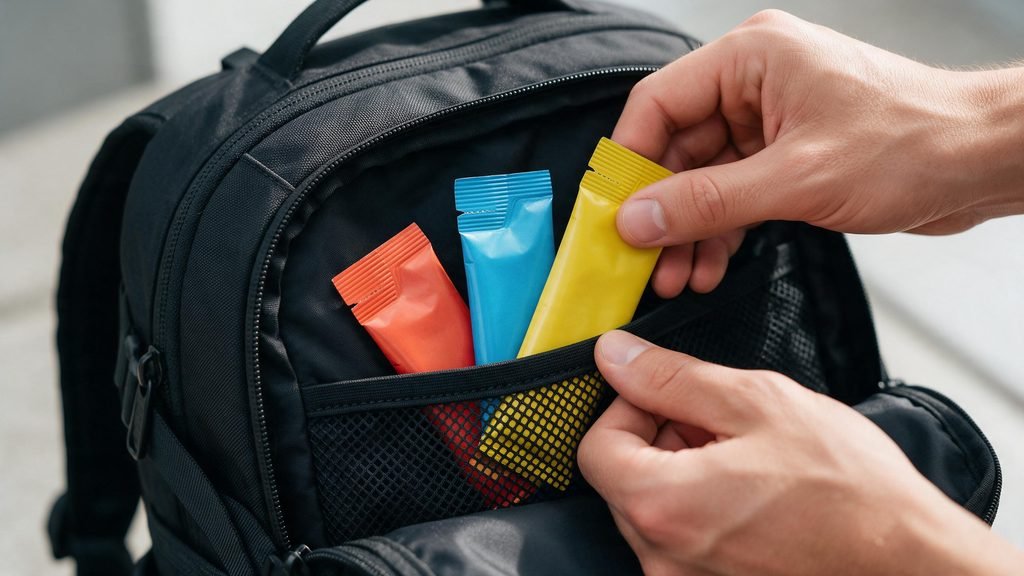
Single-Serve Protein Packets
Yes
Yes
Easiest option for carry-on bags. Factory-sealed packets clear security in seconds.
Pre-Mixed Protein Shakes (Liquids)
No (If over 3.4 oz)
Yes
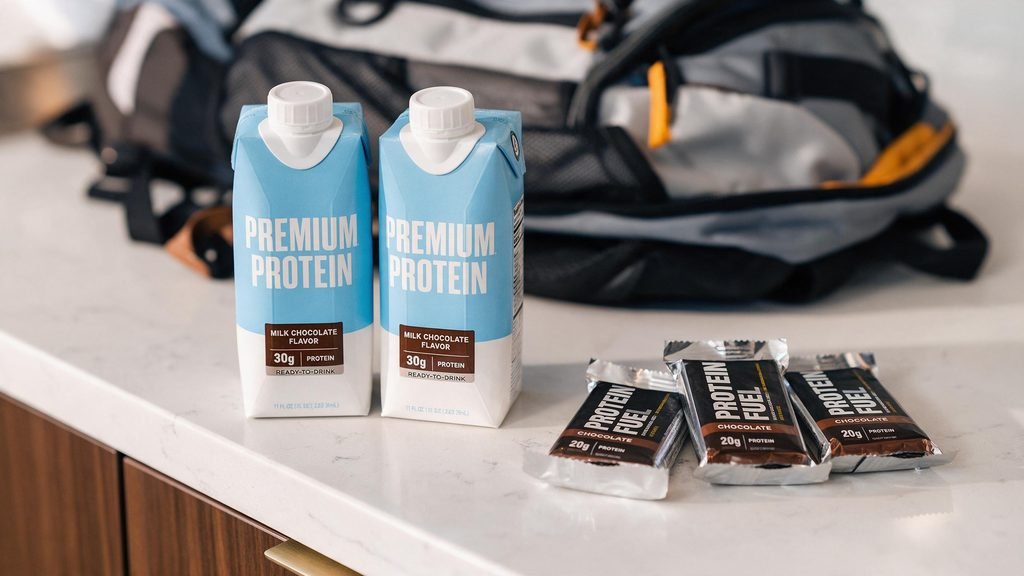
Ready-to-drink bottles (like Fairlife or Premier Protein) are liquids and must go in checked bags.
Creatine, BCAAs & Pre-Workout
Yes
Yes
Same 12 oz (350 ml) rule applies. Keep powders in their original labeled tubs to avoid delays.
Empty Shaker Bottle (BlenderBottle)
Yes
Yes
Must be 100% empty when going through the TSA checkpoint. Fill it with water after security.
Protein Bars
Yes
Yes
Solid foods are allowed in unlimited amounts in both carry-on and checked luggage.
The Exact 2026 TSA Rules for Protein Powder (The 12-Ounce Rule)
A lot of gym-goers get nervous at the airport because they confuse the TSA liquid rules with the powder rules. Since protein powder, collagen, and athletic greens are dry solids, you do not need to cram them into your tiny 1-quart liquids bag.
However, back in 2018, the TSA introduced a permanent security rule specifically for powders—and in 2026, airport screeners enforce it strictly.
1. Bringing Protein Powder in Your Carry-On Bag
You can legally bring any amount of protein powder in your carry-on roller bag or inside the best travel backpack for women and men. There is no hard limit that bans big tubs from the cabin, but size changes how security treats your bag:
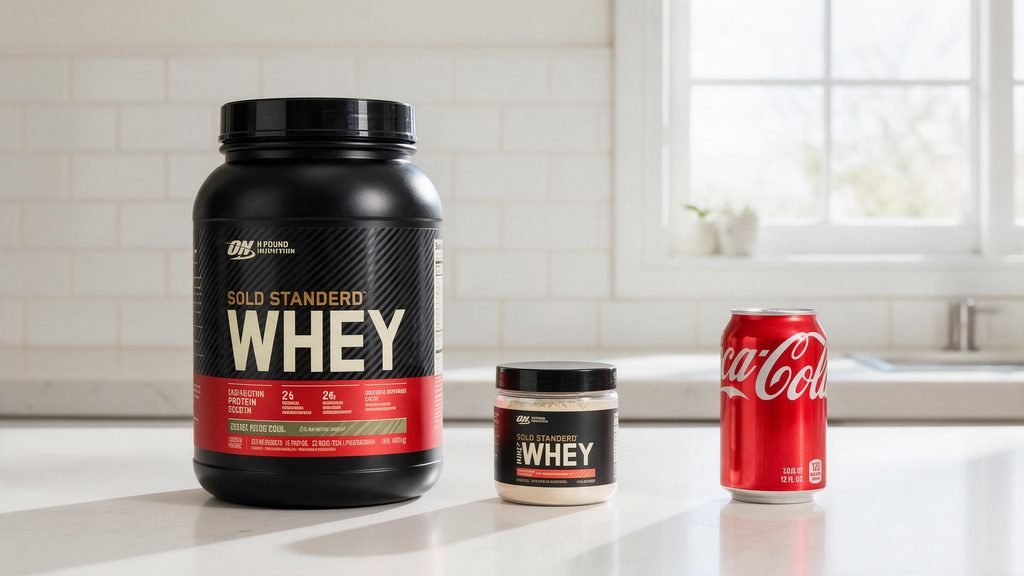
Under 12 Ounces (350 ml): If your container of protein powder holds less than 12 ounces by volume (roughly the size of a 12-ounce can of Coca-Cola), you can leave it packed inside your carry-on bag. It will pass right through the X-ray machine without a second look.
Over 12 Ounces (350 ml): If you pack a massive 2-pound or 5-pound tub of Optimum Nutrition Gold Standard or Dymatize ISO100, you must pull the tub out of your carry-on bag and place it in a separate plastic bin on the conveyor belt—just like you used to do with laptops.
Expect a Chemical Swab Test: Any powder over 12 ounces will almost always trigger a quick manual check. A TSA officer will take your tub to a side table, wipe the outside of the container (or the inside rim) with a small paper strip, and run it through an Explosives Trace Detection (ETD) machine. This takes about two minutes.
TSA PreCheck Exception: Even if you have TSA PreCheck and get to keep your shoes and belt on, the TSA still asks passengers to remove powders over 12 ounces from their bags if the airport uses older 2D X-ray scanners.
2. Packing Protein Powder in Your Checked Bag
If you are leaving for a long trip and need a full-sized tub of whey or plant protein, your checked suitcase is the best place for it.
Zero Size Limits: You can pack as many 2-pound or 5-pound tubs of protein powder in your checked luggage as your airline’s 50-pound weight limit allows.
Watch Out for Cargo Pressure Changes: The cargo hold of a commercial airplane is pressurized, but the air pressure still drops to the equivalent of an 8,000-foot mountain during flight. That trapped air inside your plastic protein tub or Ziploc bag will expand.
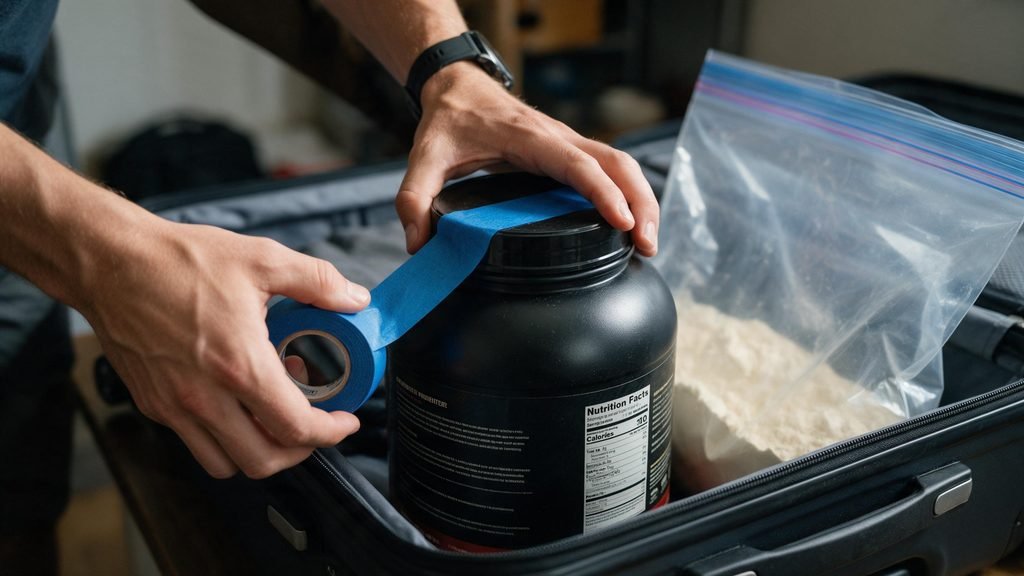
How to Prevent a “Protein Explosion”: Nobody wants to open their suitcase at the hotel and find chocolate whey powder covering their black dress clothes. Before packing a opened tub in your checked bag, screw the lid on tight, wrap a strip of painter’s tape or electrical tape around the seam of the lid, and slip the entire tub inside a heavy-duty trash bag or large Ziploc bag.
Rules for Creatine, Pre-Workout, Shakes & Shaker Bottles
Most travelers who pack protein powder also carry other daily supplements. Here is how the TSA handles the rest of your gym stack in 2026.
1. Creatine, BCAAs, and the “White Powder in a Baggie” Problem
Yes, you can bring creatine monohydrate, pre-workout (like C4 or Ghost), electrolyte powders (like Liquid I.V. or LMNT), and collagen peptides on a plane. They all follow the exact same 12-ounce carry-on rule as protein powder.
However, our travel team has seen plenty of flyers get stuck at security because they scoop pure white creatine powder into an unlabeled plastic sandwich baggie.
Is a Ziploc bag of white powder illegal? No. TSA officers are looking for explosives, not drugs.
Will it get pulled for testing? Almost guaranteed. When an X-ray operator sees a dense brick of unlabelled powder inside a backpack, they have to open the bag and swab the powder to make sure it is safe.
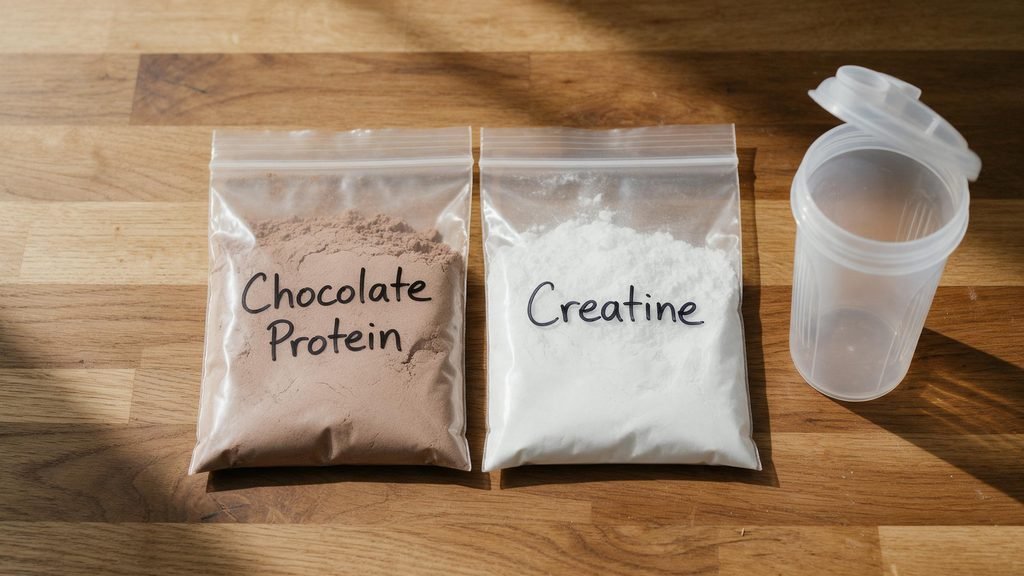
The Smarter Way to Pack: Keep creatine and pre-workout in their original small manufacturer tubs so the agent can clearly read the supplement label. If you want to save space with Ziploc bags, cut the front label off your supplement bag or write “Vanilla Whey Protein” and “Creatine” clearly on the outside with a Sharpie.
2. Pre-Mixed Protein Shakes (The 3.4-Ounce Liquid Trap)
If you drink ready-to-drink (RTD) bottled shakes like Fairlife Core Power, Premier Protein, Muscle Milk, or Orgain cartons, do not pack them in your carry-on bag.
Pre-mixed shakes are liquids, which means they must follow the TSA 3-1-1 Liquids Rule (maximum 3.4 ounces or 100 ml per container). Since a standard Premier Protein carton is 11 ounces and a Fairlife bottle is 14 ounces, TSA officers will confiscate them at the security checkpoint.
How to Bring Them: Pack pre-mixed liquid shakes inside your checked luggage (double-bagged in plastic in case a carton bursts), or buy bottled protein shakes at an airport newsstand (like Hudson News) after you clear security.
3. Shaker Bottles and Electric Mixer Cups
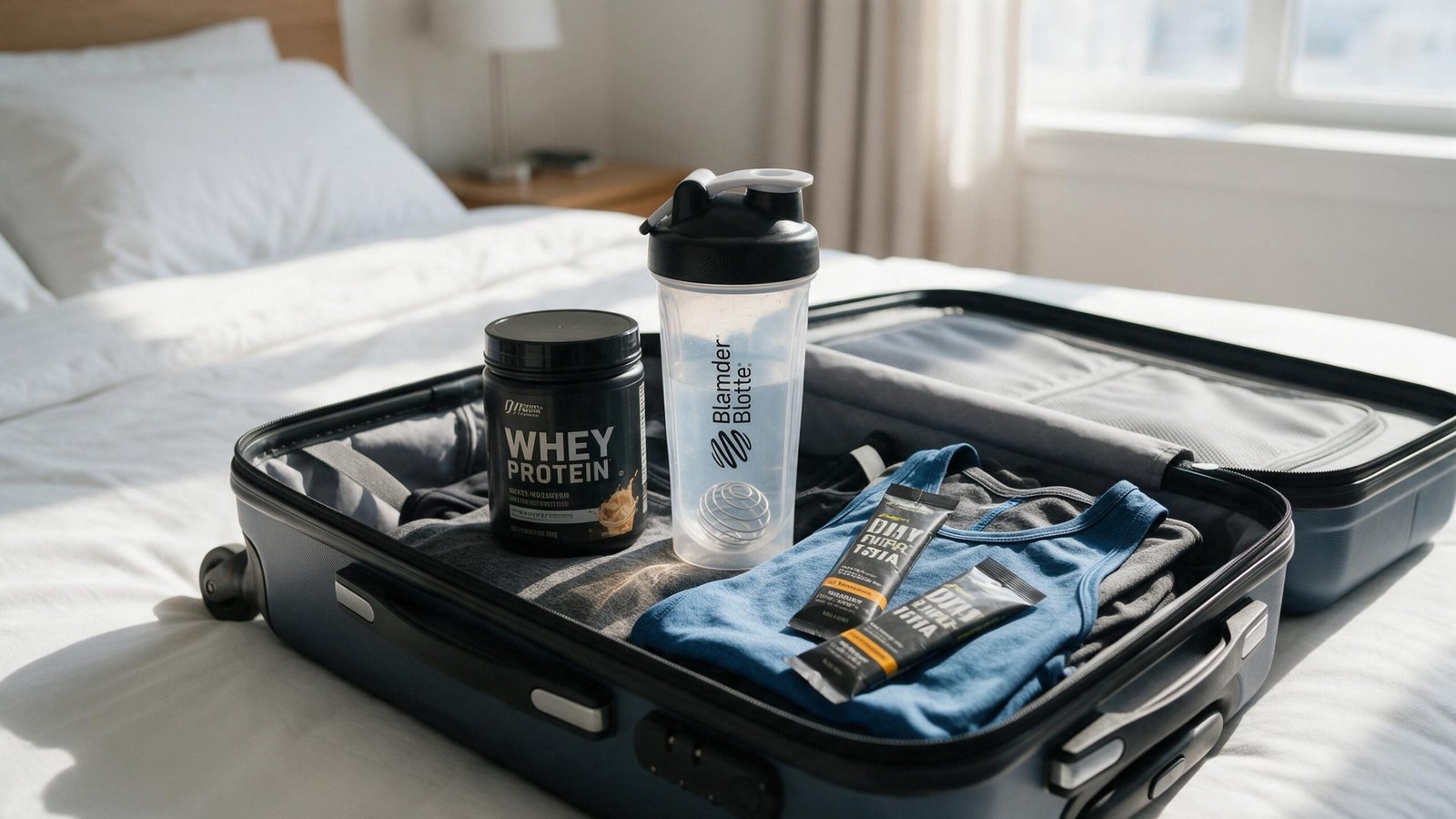
Standard Shaker Cups (BlenderBottle): You can bring any plastic or stainless steel shaker bottle—along with the metal wire Whisk Ball—in your carry-on bag, as long as the cup is completely empty when it goes through security. You can even put a dry scoop of protein powder inside the dry shaker cup before you leave home, then add water at the airport drinking fountain after security!
Electric Shaker Bottles (Voltrx / BlendJet): Many travelers now use USB-rechargeable vortex mixer bottles. Because these cups have a built-in lithium-ion battery in the base, they must go in your carry-on bag—the exact same FAA battery rule we covered in our guide on whether you can bring an electric toothbrush on a plane. (Note: If you use a portable blender with sharp metal blades like a BlendJet, the TSA bans sharp blender blades in carry-on bags. Unscrew the motor base to keep in your carry-on, and put the blade assembly in your checked bag).
International Flights & Cruise Ship Policies in 2026
If your trip takes you outside the United States or onto a cruise ship, local customs officers care much more about ingredients than the TSA does.
Whether you are flying budget economy or booking one of the 5 best business class seats from LAX to Europe, international airport security in the UK, the European Union, and Canada follows the same 350 ml (12 oz) powder screening rule for flights bound for the US.
However, customs declarations on arrival can trip you up in certain countries:
Australia and New Zealand: Both countries have the strictest agricultural biosecurity laws in the world. Because whey and casein protein powders are dairy products (typically made from over 10% milk derivatives), you must declare them on your incoming passenger card. Usually, personal-use tubs are allowed if they are commercially packaged and factory-sealed, but an open Ziploc bag of unmarked whey powder can be seized and destroyed by biosecurity officers.
Plant-Based Protein: Pea, hemp, or soy protein powders face fewer dairy restrictions abroad, though you should still keep them in commercial packaging with a clear ingredient list.
2. Taking Protein Powder on a Cruise Ship
If you are packing for an affordable family cruise on Royal Caribbean, Carnival, Norwegian (NCL), or Disney Cruise Line, you can bring your protein powder onboard with zero trouble—provided you follow two rules:
Keep It Factory-Sealed: Cruise terminal security screens bags for smuggled alcohol and prohibited items. Always bring a brand-new, factory-sealed tub or sealed single-serve packets of protein powder so port security does not suspect tampering.
Pre-Mixed Shakes on Cruises: Major cruise lines like Carnival and Royal Caribbean allow guests to bring up to 12 sealed cans or cartons (12 oz or less each) of non-alcoholic beverages—including canned or carton Premier Protein shakes—in their carry-on bag on boarding day. Plastic bottles are often restricted, so stick to cardboard cartons or cans.
How Packing Mistakes Can Cost You Money (Fees, Confiscation & Credit Card Perks)
Sports nutrition has gotten expensive in 2026. A 5-pound tub of high-end whey isolate costs $75 to $95, and a 30-day pouch of AG1 (Athletic Greens) costs $99. Making a simple mistake at the airport can turn into an expensive headache.
1. The Hidden Cost of Confiscated Tubs and Checked Bag Fees
If you pack an oversized, unmarked container of powder in your carry-on and the TSA officer cannot clear it through their chemical scanner—or if the container is opaque and blocks the X-ray image—they will give you an ugly choice: walk back out to the airline ticket counter to pay $35–$45 to check your bag, or throw your $80 protein powder in the trash.
Similarly, if you try to carry a 12-pack of pre-mixed Fairlife protein shakes ($35 value) through the carry-on lane, you will lose the entire pack unless you check a suitcase.
2. Waiving Checked Bag Fees & Using Travel Insurance
If you regularly travel with heavy tubs of supplements, liquid shakes, and gym gear, paying $80 round-trip for a checked bag makes no sense.
Airline Credit Cards: Holding a basic airline card (like the Delta SkyMiles® Gold American Express Card, United℠ Explorer Card, or Citi® / AAdvantage® Platinum Select®) automatically gives you and your companions your first checked bag free on domestic flights. That saves $70 to $80 per round-trip, letting you check all your full-sized supplement tubs and liquid shakes for free.
Reimbursing Lost or Delayed Supplements: What happens if the airline delays or loses your checked suitcase containing $150 worth of protein powder, pre-workout, and toiletries? Before you fly, review your American Express Gold Card benefits and your Gold American Express travel insurance policy. Premium travel cards offer Baggage Insurance Plans (covering lost or damaged checked bags up to $500–$3,000 per person) and Baggage Delay Insurance that reimburses essential items when your bags are delayed at your destination.
💡 Bilal Travels Pro-Tips: 3 Insider Hacks for Gym Travelers
1. The “Burp the Bag” Trick for Ziplocs If you measure out scoops of protein powder into Ziploc freezer bags for a short trip, squeeze every single bit of air out of the bag before sealing it, then double-bag it. If you leave air inside the Ziploc, the drop in cabin air pressure at 35,000 feet will inflate the bag like a balloon and pop the zipper seal open inside your luggage!
2. Use a Clean Baby Formula Dispenser Want a tough, compact way to carry three exact scoops of protein powder in your backpack without bringing a bulky tub or a flimsy plastic baggie? Buy a $5 Munchkin Powdered Formula Dispenser from the baby aisle at Target or Walmart. It holds three pre-measured servings in a hard, spill-proof plastic container with a pour spout that easily stays under the TSA 12-ounce limit.
3. Pack Single-Serve Sample Packets for Carry-On Trips Whenever we fly carry-on only for a 3-to-5-day trip, our travel team leaves the big tubs at home and packs factory-sealed single-serve protein packets (brands like Ghost, Clean Simple Eats, Ascent, and Vital Proteins sell individual tear-open packets). Because each packet is only 1.2 ounces and clearly labeled by the manufacturer, you can bring a dozen of them in your carry-on and TSA agents won’t even blink.
Frequently Asked Questions (FAQs)
Will TSA test my protein powder if it is in a Ziploc bag?
If the Ziploc bag holds more than 12 ounces (350 ml) of powder—or if it is filled with an unlabeled white powder like creatine—there is a very high chance TSA officers will pull your bag aside to run a quick chemical swab test. To save time at the checkpoint, write the name of the powder on the Ziploc bag with a marker or keep the supplement label inside the bag.
Can I bring protein powder on a plane without the original container?
Yes, the TSA does not require protein powder to be in its original retail tub for domestic flights. You can pack smaller portions in Ziploc bags, Tupperware containers, or dry shaker bottles, though keeping the original container is best when flying internationally through foreign customs.
Can I put a scoop of protein powder inside my empty BlenderBottle before my flight?
Yes, you can pre-load dry protein powder inside an empty shaker cup in your carry-on bag, provided the powder inside is under 12 ounces. Just make sure you do not add water or milk until after you have passed through the TSA security checkpoint.
Are protein bars allowed in carry-on bags through TSA?
Yes, protein bars (such as Quest, RXBAR, Built Puff, and Clif Builder’s bars) are classified as solid foods by the TSA. You can pack as many protein bars as you want in both your carry-on and checked bags without any size or screening limits.
Why does the TSA screen protein powder over 12 ounces?
In 2018, following an international aviation plot involving explosive powders disguised in luggage, the TSA and international security agencies mandated extra screening for all powders over 12 ounces (350 ml). Dense containers of powder look very similar to certain homemade explosives on standard X-ray screens, so officers swab them to verify they are harmless organic food products.